
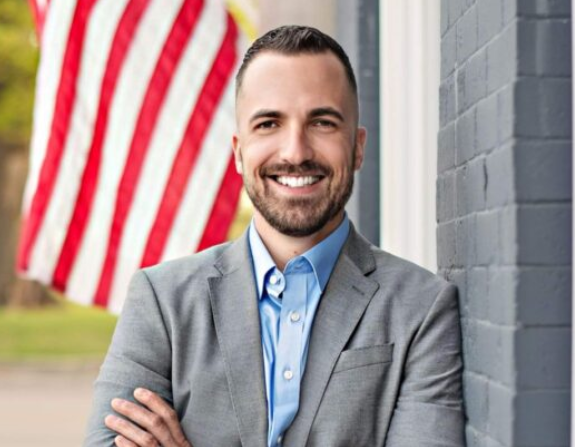
This week, I officially filed to run again for State Representative of the 155th District. It has truly been one of the greatest honors of my life to serve the people of this district. Representing our families, farmers, small business owners, and communities in Jefferson City is a responsibility I do not take lightly.
Over the past term, I have worked diligently to listen carefully, study the issues thoroughly, and cast votes that reflect the values and priorities of the people I represent. Public service is not about titles — it is about service. It means answering phone calls, returning messages, attending local events, showing up when natural disasters strike our district, and being present when constituents need assistance navigating state government.
I am proud of the work we have accomplished together, and I remain committed to standing up for our district’s interests at the Capitol. The relationships built, the conversations shared, and the trust placed in me mean more than I can express.
It has been a true pleasure to serve the 155th District, and I would be grateful for the opportunity to continue working on your behalf. Thank you for your continued support and encouragement.
This week, I want to highlight HB 1855, the Alpha-Gal reporting bill.
First, thank you to everyone from our district and across Missouri who traveled to Jefferson City to testify in support of this legislation. Your voices mattered. More than 300 individuals submitted testimony, totaling 344 pages, a clear demonstration of how widespread and serious this issue has become across our state.
Since last week’s hearing, I have participated in multiple media interviews, consulted with physicians, and worked closely with the Department of Health and Senior Services. Through those discussions, we have refined the language to make the bill stronger and more precise. I am also pleased to share that HB 1855 has been endorsed by the Missouri Farm Bureau and the Missouri Cattlemen’s Association, reflecting broad support from Missouri’s agricultural community.
I’m pleased to report HB 1855 passed out of committee on a 14–0 vote with strong bipartisan support and now has 19 co-sponsors. The next step is referral through the Rules Committee and placement on the House calendar for floor debate, and I am hopeful it will be taken up before the legislature adjourns for spring break.
Speaking of spring break, this is the time when legislators spend a full week back in their districts. If you would like to meet with me while I am home, please contact my office to schedule an appointment. I always welcome the opportunity to hear from you.
This week, I was also honored to speak at Disability Rights Advocacy Day at the Capitol. As someone who has lived with dyslexia, dysgraphia, dyscalculia, ADHD, and an auditory processing disorder, I understand firsthand that intelligence, ability, and work ethic are not always reflected in standardized systems that were not designed with everyone in mind. What enabled my success was not favoritism, but reasonable accommodation that leveled the playing field and allowed my abilities to be fully demonstrated.
This session, I have filed HB1639 and HB1640. I encourage you to take a moment to look them up. While they may not advance this year, I want you to know that as long as I serve in the legislature, I will continue to file and fight for these bills. They send a clear message that Missouri believes in access, equity, and opportunity for individuals with disabilities. These measures help students succeed in higher education, allow qualified professionals to enter the workforce, and remove unnecessary bureaucratic barriers that disproportionately impact people with disabilities.
Together, we will continue working to promote equal opportunity and ensure every Missourian has the chance to succeed.
House Advances Constitutional Limits on Government Spending and Tax Growth
The Missouri House has approved HCS HJR 169, a proposed constitutional amendment that would place new limits on how quickly state and local government revenue and spending can grow. If ultimately approved by voters, the measure would require voter approval before most tax increases, extensions of expiring taxes, or certain government debt obligations could take effect. Under the proposal, revenues collected above established limits would generally be returned to taxpayers unless voters authorize governments to retain the funds. The amendment also requires clearer public notice before local tax or bond elections and establishes reserve fund requirements intended to prepare governments for economic downturns or emergencies. This measure would serve as a long-term taxpayer protection designed to promote transparency and fiscal restraint, but some have cautioned the limits could restrict flexibility during periods of rapid growth or unexpected need. By a vote of 87-49, the proposal now moves to the Senate before potentially appearing on a statewide ballot if passed.
House Passes Supplemental Budget to Fund Current State Operations
House lawmakers approved HCS HB 2014, Missouri’s supplemental budget bill, providing additional funding to state agencies and programs for the remainder of the current fiscal year. Supplemental budgets are used to cover costs that exceed original projections, including program expenses, grant obligations, and required fund transfers. The legislation appropriates approximately $3.1 billion for the fiscal year ending June 30, 2026. The measure now awaits Senate consideration.
Five-Year Vehicle Registration Option Moves Forward
Legislation designed to simplify vehicle registration for Missouri drivers advanced out of the House this week. HB 2189 allows eligible vehicles less than six model years old to register for up to five years at one time beginning in 2027, provided owners pay registration fees upfront and meet documentation requirements, instead of the current one or two year options. The proposal also eliminates Missouri’s current system requiring certain vehicles to renew registration based on model year. The change would reduce trips to license offices, streamline renewals, and make vehicle ownership more convenient for Missourians.
House Approves Property Tax Assessment Reforms
In response to ongoing concerns about rising assessments, the House approved HCS HB 2178, which revises procedures used when valuing certain commercial and industrial properties. The legislation shifts the burden of proof to assessors when computer-assisted valuation methods are used and requires a physical inspection before assessments can increase beyond a specified threshold. It also establishes deadlines for resolving reassessment appeals and allows taxpayers who successfully challenge valuations in certain cases to recover costs and attorney fees. Supporters say the proposal improves transparency and predictability for property owners, while critics argue it does not address situations where assessments should decrease.
House Votes to Make School Athletics Participation Policy Permanent
The House voted to remove the expiration date on Missouri’s existing policy governing participation in school athletic competitions under HCS HB 1663, 1607 & 1973. Current law requires students to compete on teams designated for their biological sex, as listed on their official birth certificate, with an exception allowing female students to compete on male teams if no comparable female team is offered. That provision was set to expire on August 28, 2027. The bill removes the expiration date, making the policy permanent. Supporters argue that maintaining separate teams for boys and girls preserves fairness in competition and protects opportunities for female athletes. Opponents contend the policy is discriminatory toward transgender students and say it could further marginalize a small group of youth who want to participate in school activities. Following House approval with a vote of 98-37, the measure now moves to the Senate for consideration.
House Passes Student Personal Expression Protections in Schools
The Missouri House has passed HCS HB 2682, which renames the Missouri Student Religious Liberties Act as the “Missouri Safeguarding Personal Expression at K-12 Schools (SPEAKS) Act.” The legislation expands existing protections to cover political and ideological speech in addition to religious expression by public school students. Schools would be prohibited from discriminating against student clubs based on their viewpoints, and clubs may require members to follow the organization’s beliefs and standards of conduct. The bill clarifies that schools may still restrict speech not protected by the First Amendment or conduct that substantially disrupts school operations. Students or organizations who believe their rights were violated could pursue legal action or raise violations as a defense in disciplinary proceedings. The goal is to ensure students can openly express differing viewpoints, but opponents raised concerns about potential litigation costs and challenges for schools enforcing policies. The measure now moves to the Senate following a House vote of 99-47.
Teacher Licensing Compact Aims to Ease Workforce Shortages
The Missouri House has passed HB 2274, legislation adding Missouri to the Interstate Teacher Mobility Compact. The compact allows licensed teachers from participating states to receive a comparable Missouri teaching license following an equivalency review. The bill also creates an expedited pathway for military service members and eligible military spouses seeking licensure. Member states would share licensing and disciplinary information through a national commission overseeing the agreement. This proposal will help address teacher shortages and improve recruitment by making it easier for educators to relocate. Missouri already maintains reciprocity agreements but the compact should help create a more consistent, nationwide system. With a vote of 133-13 in the House, the bill now heads to the Senate for further consideration.
Statewide Regulation of Tobacco and Vapor Products Advances
With a vote of 93-43, the House passed HCS HB 2085, which would place primary authority for regulating tobacco, alternative nicotine, and vapor products at the state level. The legislation limits future local ordinances that impose standards or licensing requirements beyond state law, though previously enacted local rules would remain in effect. Consistent statewide regulations reduce confusion for retailers operating across multiple communities. Opponents say the measure limits local governments’ ability to address public health concerns specific to their areas.
Ballot Language Changes Seek Greater Tax Transparency
HCS HB 1790 received House approval with the goal of making tax-related ballot questions easier for voters to understand. The legislation requires taxation measures to be labeled numerically or alphabetically rather than with descriptive titles and mandates clearer disclosure of the financial impact of property tax changes based on home value. Supporters say the proposal promotes neutrality and transparency in ballot wording so voters can better evaluate tax proposals. The measure now awaits Senate consideration.
Sales Tax Exemption Updates Approved
The Missouri House has passed HCS HB 1883, which updates state sales tax exemptions related to certain medical equipment and auction sales. The bill removes outdated statutory language tied to a 1980 federal definition and expands the exemption for wheelchairs to include accessories. It also exempts most used items sold at auction from sales tax, excluding titled vehicles and boats. Supporters say the legislation clarifies inconsistent rules governing auction transactions and modernizes state law. Opponents expressed concern that the changes could reduce revenue for local governments. The measure now moves to the Senate after passing with a vote of 98-36.
Athletic Trainer Compact Approved by House
HB 1844 establishes an interstate compact allowing licensed athletic trainers to practice across participating states without obtaining additional licenses. The agreement creates shared licensing standards and oversight through a national governing commission. Supporters say the compact will improve access to athletic trainers, particularly in rural communities, and assist military families who frequently relocate. Missouri practice standards would remain in effect for out-of-state professionals working here.
Outdoor Advertising and Highway Signage Changes Advance
The House approved HCS HB 2145 making several adjustments to outdoor advertising regulations. Beginning in 2026, city limit signs along state highways would include population figures. The bill also exempts certain school and nonprofit athletic facility signage from permitting requirements and allows some businesses to place signs across nearby highways without associated permit fees. This measure helps small businesses improve visibility, but some expressed concerns related to safety and fairness in fee exemptions. Following a vote of 142-2, the legislation now moves to the Senate.
Missouri Observes Severe Weather Preparedness Week Following Deadly 2025 Storm Season
Missouri Severe Weather Preparedness Week will be observed March 2–6, 2026, following the deadliest year for tornadoes in the state since 2011. The National Weather Service reports 16 Missourians died due to tornadoes in 2025, along with three flooding deaths and one fatality caused by a severe thunderstorm. It marked the highest tornado-related death toll since the devastating 2011 Joplin EF-5 tornado. Missouri also experienced five federally declared major disasters in 2025, more than any other state. State Emergency Management Agency Director Jim Remillard urged residents to take preparedness seriously and ensure every household member understands how to respond to severe weather threats.
As part of preparedness efforts, Missouri’s annual Statewide Tornado Drill will take place at 11 a.m. on Wednesday, March 4. During the drill, NOAA Weather Radios set to receive Routine Weekly Tests will issue an alert, and outdoor warning sirens will sound in participating communities. Schools, businesses, and families are encouraged to practice taking shelter in an interior room on the lowest level of a sturdy structure. Each day of the week will highlight a different safety focus, including receiving weather information, lightning safety, tornado safety, hail and wind safety, and flood safety. Additional preparedness resources are available through Missouri’s “Ready in 3” program and the state’s StormAware website.
If you ever have, any questions or concerns feel free to call me at 573-751-2042 or email me at Matthew.Overcast@house.mo.gov. Our office is always here for you.