
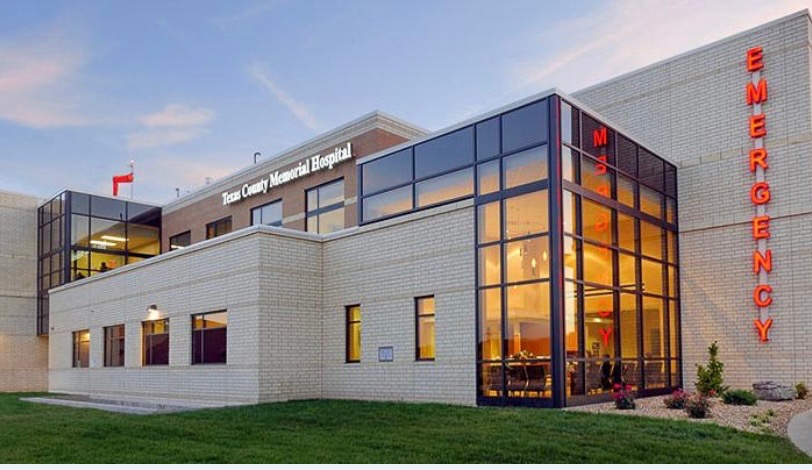
Houston, MO— Representatives from the Missouri Hospital Association (MHA) provided an update on Missouri’s Rural Health Transformation Program at the Texas County Memorial Hospital monthly board of trustees meeting last Tuesday. Nate Blackford, MHA senior vice president of membership services, and Jane Drummond, MHA general counsel and senior vice president of governmental relations, provided an overview of the program and answered questions.
The Rural Health Transformation Program was created in response to federal healthcare cuts also included in HR 1, known as the “One Big, Beautiful Bill,” which are expected to disproportionately impact rural hospitals and residents in rural America. According to Blackford, Missouri’s allocation amounts to approximately $216 million in year one as part of a five-year, $50 billion national initiative, though Blackford noted this amounts to roughly $83 per rural Missourian.
“While this funding represents a meaningful step forward, it is important to recognize these resources alone cannot fully transform rural healthcare,” Blackford said. “The ongoing health improvement efforts Missouri’s hospitals, like TCMH, will continue to be integral to the patients and communities they serve.”
Missouri’s rural population—nearly 2.5 million individuals spread across 104 rural and rural-adjacent counties—faces longstanding challenges with access to care and operational sustainability. Program goals include improving health outcomes, expanding access to care through regional rural coordinating “hub” networks, standardizing technology and data sharing, and strengthening the rural healthcare workforce. About 20% of funding in the state’s award is initially expected for minor capital improvements, such as facility renovations, followed by opportunities for service line expansions.
The state plans to divide eligible rural counties into roughly 30 hubs, grouped into seven regions, to coordinate care and investments based on local needs. Hub leadership structures and staffing models are still under development, with an emphasis on avoiding disproportionate influence by any one hospital, health system or other providers, and ensuring collaboration among hospitals, clinics, behavioral health and primary care providers, and community organizations.
Board members expressed concerns about several aspects of the program. Noted concerns include the amount of funds (10%) allocated to the state to administer the program, which includes hiring administrative staff for the program. Providers within hubs are envisioned to work together for the benefit of the patients, requiring a structure that minimizes competition concerns between the providers in the hubs centered around the program’s goals. The program plans to utilize web-based programs with rural patients while many parts of rural Missouri and Texas County still lack access to affordable broadband internet. More broadly, board members noted deep concerns, supported by data analyses, that the program funding will not scratch the surface in offsetting anticipated Medicaid funding losses.
“While this program offers some opportunities, the limited funding and administrative costs may not fully address the financial pressures our hospital will face from cuts to Medicaid,” Bill Bridges, TCMH chief executive officer, said. “Rural hospitals like ours are on the front lines of healthcare, and we need to ensure that transformation efforts don’t disadvantage small providers.”
Drummond noted that the changes in federal funding for Medicaid patients could result in a loss of approximately $1 billion annually to Missouri’s state budget, raising concerns about long-term Medicaid funding and potential pressure on rural hospitals after the transformation funding expires in five years.
Despite uncertainties, MHA representatives emphasized that the program presents opportunities for early investments in facility improvements, technology, and care coordination. They encouraged the hospital to begin identifying capital and infrastructure needs and to share real-world examples—such as broadband access issues and community engagement initiatives—to help inform ongoing discussions with state leaders.
Blackford also underscored the importance of sharing patient stories to demonstrate TCMH’s impact as a rural hospital.
Board members discussed how these stories can communicate the hospital’s contributions to community health and illustrate the value of local care within broader funding and transformation efforts.
“Patient stories show the real difference we make in our community and help leaders understand why local care matters,” Bridges added.
Bridges added that he hopes to reconnect with our state senators and Congressman Jason Smith to discuss with them personally about how federal cuts will affect TCMH and local patients.
In other business, April Crites, TCMH quality and risk management director, reviewed the hospital’s quarterly patient satisfaction scores with board members and expressed satisfaction with overall performance.
“We are pleased to see an increase in patient satisfaction across the hospital’s inpatient services and outpatient ambulatory surgery departments,” Crites said.
Crites also presented the hospital’s 2025 Quality Assurance and Performance Improvement (QAPI) data. As part of ongoing initiatives, the social services and case management teams continued addressing social determinants of health (SDOH) throughout the year.
She explained that the medical-surgical, intensive care, and obstetrics departments assess SDOH during patient interviews for inpatients age 18 and older. Patients are evaluated in six key areas: access to food, housing, transportation, utilities, medications, and personal safety. This process helps staff better understand challenges patients face after discharge and identify factors that could negatively impact their health.
“As a result of our continued efforts to ask SDOH-related questions in 2025, we identified needs in 57 inpatients,” Crites said. “These patients were connected with appropriate community resources through our social worker and case manager, which we hope will lead to improved patient outcomes.”
Crites also reported that the implementation of Rapid AI technology allowed the hospital to retain 31 stroke patients at TCMH rather than transferring them to larger facilities.
“This technology has drastically enhanced the quality of stroke care in Texas County,” Crites said. “It ensures our patients—regardless of where they live—have access to the best possible care.”
Crites also praised hospital staff and community members for donating 206 units of blood through the Community Blood Center of the Ozarks, significantly exceeding the hospital’s 2025 goal of 125 units.
Looking ahead, Crites highlighted several QAPI initiatives planned for 2026. One focus will be improving the cardiac rehabilitation patient completion rate, currently at 58 percent.
“While the national completion rate is approximately 25 percent, we want as many patients as possible to complete the program to support long-term health and longevity,” Crites said.
Plans include offering transportation assistance, flexible scheduling, ongoing patient education on the benefits of cardiac rehabilitation, and fostering a positive, supportive environment.
Another area of focus for 2026 involves the hospital’s physical and occupational therapy departments. Crites shared that TCMH Rehabilitation Services Director, Ellen Willis, aims to further improve patient access by ensuring therapy appointments are scheduled within two weeks to prevent delays in care.
Helania Wulff, TCMH public relations and marketing director, shared highlights from the Texas County Travel and Tour held January 23 in Licking in collaboration with community partners.
“The tour provided a valuable opportunity to showcase the resources available in the Licking community and to facilitate networking among attendees,” Wulff said.
Approximately 30 individuals participated in the tour, which included visits to Rinne Pharmacy, the Licking Police Department, and the TCMH Licking Family Clinic. Representatives from the Licking School District, City of Licking, Texas County Health Department, Intercounty Electric Cooperative, Recovery Underground, and the Intercounty Charitable and Educational Foundation also shared information about their organizations and community resources to support community well-being and improve population health.
Wulff added that two additional community tours are scheduled for February and March in the cities of Houston and Cabool.
Bill Bridges, TCMH Chief Executive Officer, announced that Katelynn Atchley of Licking has been hired as the hospital’s new Human Resource Director, with her role beginning February 2. He also reported that Nicki Lawson of Mountain Grove has been hired as the new Administrative Assistant and will begin February 16.
Linda Pamperien, TCMH chief financial officer, presented the December financials, which reflected an increase of $872,785 in overall revenues above budgeted monthly expectations.
“Our outpatient revenue increased $748,904, nearly a ten percent increase, and our inpatient volumes increased $80,093, a 5.8 percent increase from our budgeted monthly expectations,” Pamperien said.
Pamperien reported the hospital recorded 90 admissions in December, a decrease of 45 admissions compared to the same period in 2024, with 989 admissions year-to-date.
The financial report showed the hospital’s earnings before interest, depreciation, and amortization (EBIDA) were positive at $1,173,001 for the month, with a year-to-date EBIDA of $1,041,219.
Present at the meeting were Blackford; Drummond; Bridges; Crites; Wulff; Pamperien; Courtney Owens, chief nursing officer; Christopher Baldwin, MD, chief of staff; board members Jim Perry, OD; Ross Richardson; Joleen Durham; Jennifer Hugenot, and Jerri Crump.
The next meeting of the TCMH board of trustees is Tuesday, February 24, at noon in the hospital board room.